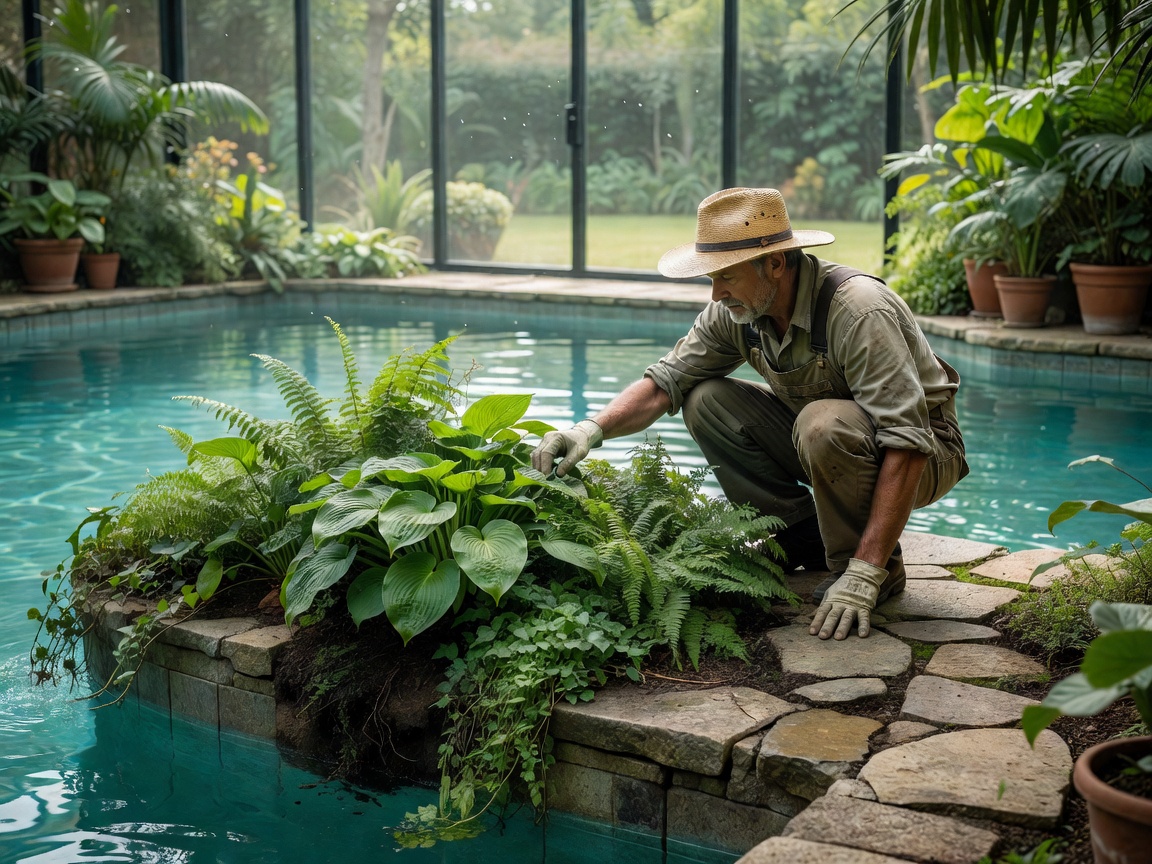
Map the room as a growing space
A planting plan should begin with conditions at the proposed leaf positions. Daylight varies with orientation, roof geometry, framing, surrounding buildings and seasonal shading. A bed that appears bright in a summer photograph may receive very little useful light in winter. Human visual comfort is not a reliable measure of the light available for plant growth.
Ask the horticultural specialist to identify both promising and marginal zones. Those close to doors may experience cold draughts. Others may sit beneath warm supply air or next to hot glazing. A tall specimen can shade lower plants as it matures, so the design needs a view of the future canopy rather than only the opening-day arrangement.
Root conditions are equally important. High room humidity does not indicate how much water remains in a planting medium. A plant can lose roots through waterlogging while its leaves appear to need more water. Irrigation decisions should respond to the actual root zone and species requirements, not simply to the tropical character of the room.
Keep planter drainage out of the pool
Planters require contained growing media, reliable drainage and a way to inspect their waterproofing. Their overflow must lead to an appropriate drainage system, not to swimming water. Nutrients, fine particles and organic debris are unwanted additions to a pool treatment system. Conversely, pool splash is not a substitute for an irrigation supply.
Detail the pool edge and planter edge together. A narrow stone strip may look adequate in a drawing but provide no practical protection from an active swimmer. Consider where people enter the water, where children may play and where cleaning equipment travels. Avoid placing a sensitive plant where repeated splash is inevitable and then relying on maintenance to compensate.
Salt-chlorinated pools still contain chlorine, produced through an electrolytic process. They are not freshwater ponds, and their splash should not be assumed harmless to roots or foliage. A horticultural review should consider the proposed water chemistry and the likely exposure. Separate irrigation water may also need testing where salinity or alkalinity could influence plant performance.
Large planters introduce structural loads. The architect and structural engineer need the saturated weight of the full assembly, including medium, retained water, containers and mature plants. An attractive bed should not be added late to a slab or suspended deck without checking the consequences.
Use candidate species, not a universal list
Howea forsteriana, Rhapis excelsa, Monstera deliciosa and Asplenium nidus often appear in interior-planting discussions because of their foliage and differing growth habits. Their inclusion here is not a recommendation for every pool room. Light, root volume, temperature stability, available height and care capacity still decide whether a candidate is appropriate.
Consider mature spread, not only mature height. A leaf extending over a swimming lane may obstruct movement, drop litter or prevent cleaning. Spiny, sharply edged or irritating plants are poor choices where bare skin will brush against them. Some familiar indoor species, including Monstera deliciosa, contain irritating calcium oxalate crystals; suitability needs particular care where children or pets can reach them.
Flowering and fruiting may add cleaning work. Heavy pollen, fallen flowers and sticky residues can conflict with the desired pool environment. A restrained palette of well-sited plants may be more convincing over time than a densely layered display requiring continual replacement. Ask which plants are expected to be long-term specimens and which are planned as replaceable underplanting.
| Condition | Design consequence |
|---|---|
| Low winter light | Revise species, density or supplementary lighting |
| Frequent splash | Move planting or redesign physical separation |
| Restricted root volume | Limit mature size and plan replacement access |
| Reachable foliage | Review toxicity, sharp edges and contact irritation |
A living garden needs a working edge
Pruning, leaf cleaning and pest inspection need space. Someone should be able to reach the back of a bed without stepping onto fragile irrigation lines or leaning over the pool. Provide routes for taking out a failed specimen and bringing in a replacement. Where a plant will eventually exceed the doorway, its removal strategy needs particular thought.
Inspect incoming plants before installation and agree on a pest-management approach suitable for an occupied pool room. Broad pesticide advice is inappropriate around swimmers, treated water and enclosed air. Any product use must follow its label and applicable local rules, with professional advice where needed. Physical separation and early detection reduce the pressure for disruptive treatment.
Finish the brief with an establishment plan: who checks moisture, who adjusts irrigation, who records plant losses and who decides when a species is unsuitable. A garden should be allowed to change in response to evidence. Replacing a failing plant repeatedly without reviewing its light or drainage only disguises a design problem.
Further reference
Continue with glazing and usable light or the care and handover brief.